1. Brother 1034D — Best Serger for Beginners
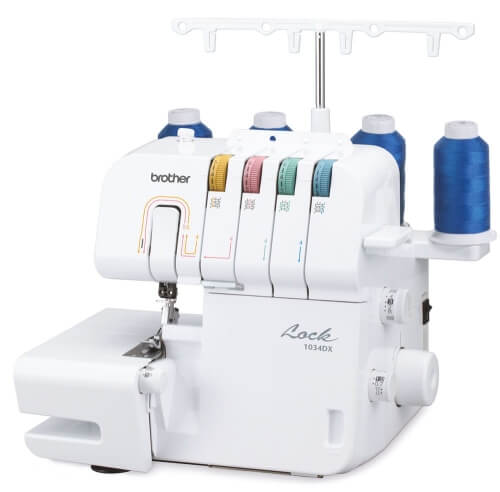
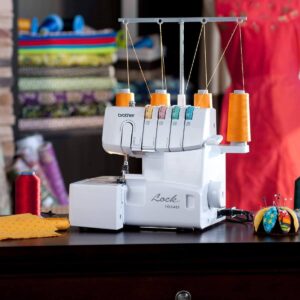
The Brother 1034D is the most popular home serger in America, and that reputation is earned. Three to four thread capability, 1,300 stitches per minute, a metal frame, and a color-coded threading system that takes most of the guesswork out of setup. It’s compact — about 13.5 pounds — comes with a carrying handle, and includes a few presser feet, a manual, and an instructional DVD.
What I appreciate about this machine as a mechanic: it’s forgiving. If you thread it wrong or dial in the wrong tension, you’ll get a bad stitch — but you won’t damage the mechanism. That’s exactly what a learning machine should do. Mistakes become lessons, not repair bills.
The differential feed runs from 0.7 to 2.0, which is a solid range for most home fabrics. Setup is straightforward, and the color guides make threading manageable even the very first time.
Pros: Most beginner-friendly threading on this list, reliable for hobby use, affordable, wide availability of parts and accessories.
Cons: Not designed for heavy daily production. If you’re sewing for hours every day, you’ll notice wear after a year or two. For weekend sewing and regular hobby use, it holds up fine.
Best for: First-time serger owners who want to learn without stress.
2. Janome MOD-8933 — Best for Long-Term Reliability
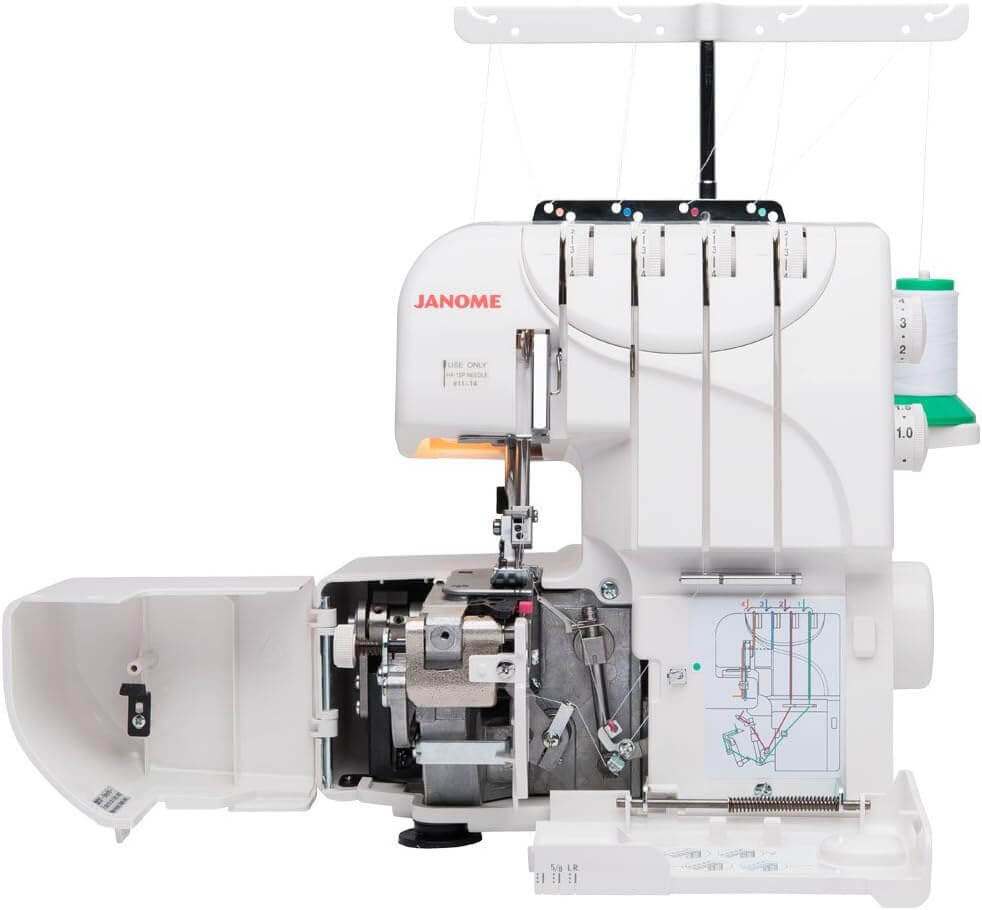
 Janome is one of my go-to recommendations, not because of marketing but because their machines show up on my workbench far less often than most other brands. Japanese engineering, tight quality control, and mechanisms that stay in calibration. That matters more than any feature list.
The MOD-8933 handles 3–4 threads with a differential feed range of 0.5–2.25mm. At 14.3 pounds it’s easy to carry. The front cover opens on both sides, giving you real access to the loopers — which makes threading noticeably less frustrating. There’s also a lower looper pre-tension slider, which is a small detail that saves more time than it sounds like it should.
The retractable upper knife deserves a mention too. Need a decorative stitch without trimming the edge? Pull the knife back, done. No adjustments, no swapping parts.
Pros: Japanese build quality, excellent looper access, handles denim and stretch fabrics well, adjustable presser foot pressure for different fabric weights.
Cons: Costs a bit more than the Brother 1034D. If you’re on a tight budget, that gap matters. But in my experience, the reliability difference is real and the extra cost pays for itself over time.
Best for: Anyone who wants to buy once and not think about it again for years.
3. Singer ProFinish 14CG754 — Best for Versatility
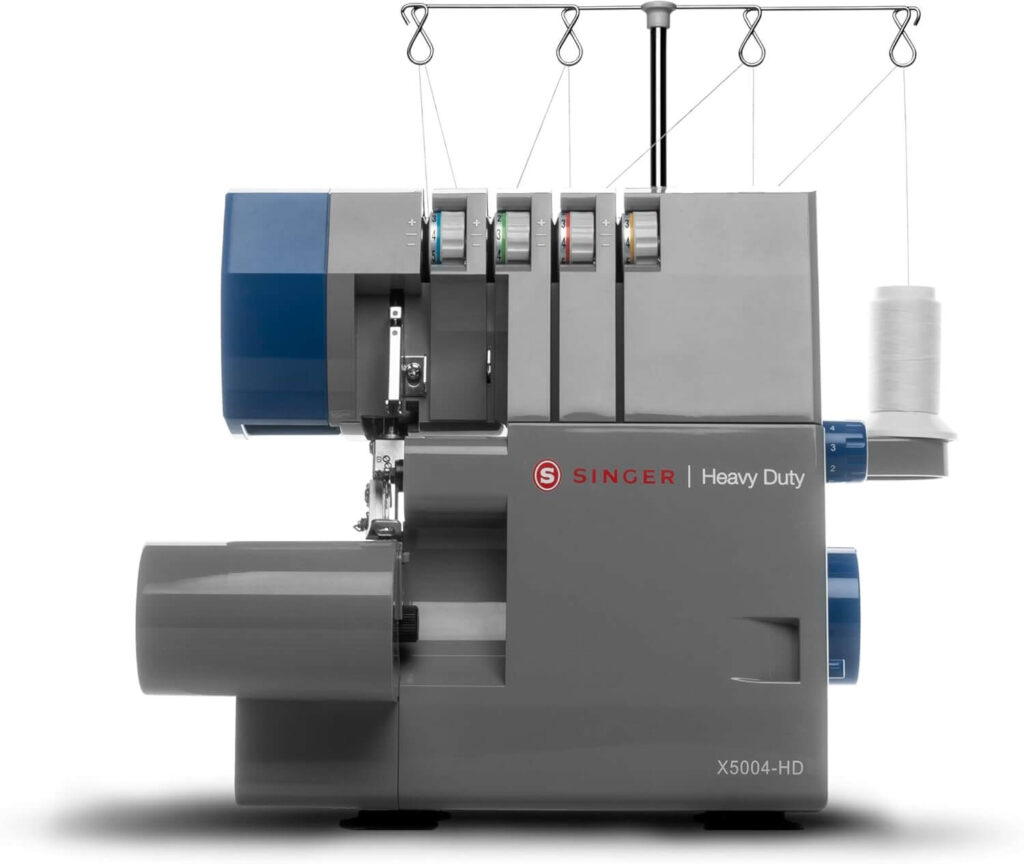
Singer has been in the sewing industry longer than almost anyone, and the ProFinish is a capable machine that gives you more range than the two options above. The key difference: 2-3-4 thread capability. That two-thread mode allows for lighter, more delicate edge finishing — something you simply can’t do on the Brother 1034D. For fine fabrics like chiffon or organza, it’s useful.
Speed is 1,300 stitches per minute. The free arm on this machine is one of the more generous ones I’ve seen in this price range — there’s actual working space for hemming sleeves and cuffs, not just a token gap. Rolling hem conversion doesn’t require swapping the needle plate, which saves time on a task you’ll do regularly.
I want to be straight with you on one thing: this machine runs louder and vibrates more than the Janome or Juki at a similar price. The housing is mostly plastic, and it feels like the manufacturer cut corners on damping. For a few hours of sewing per week, it’s manageable. For longer sessions, you’ll feel it.
Price: Around $280–320 on Amazon.
Pros: 2-3-4 thread range, spacious free arm, color-coded threading, quick rolled hem conversion.
Cons: More noise and vibration than competitors, plastic build feels less solid over time.
Best for: Sewers who work with a variety of fabric types and want the flexibility of 2-thread mode.
4. Elna eXtend 664PRO — Best Feature Set at This Price
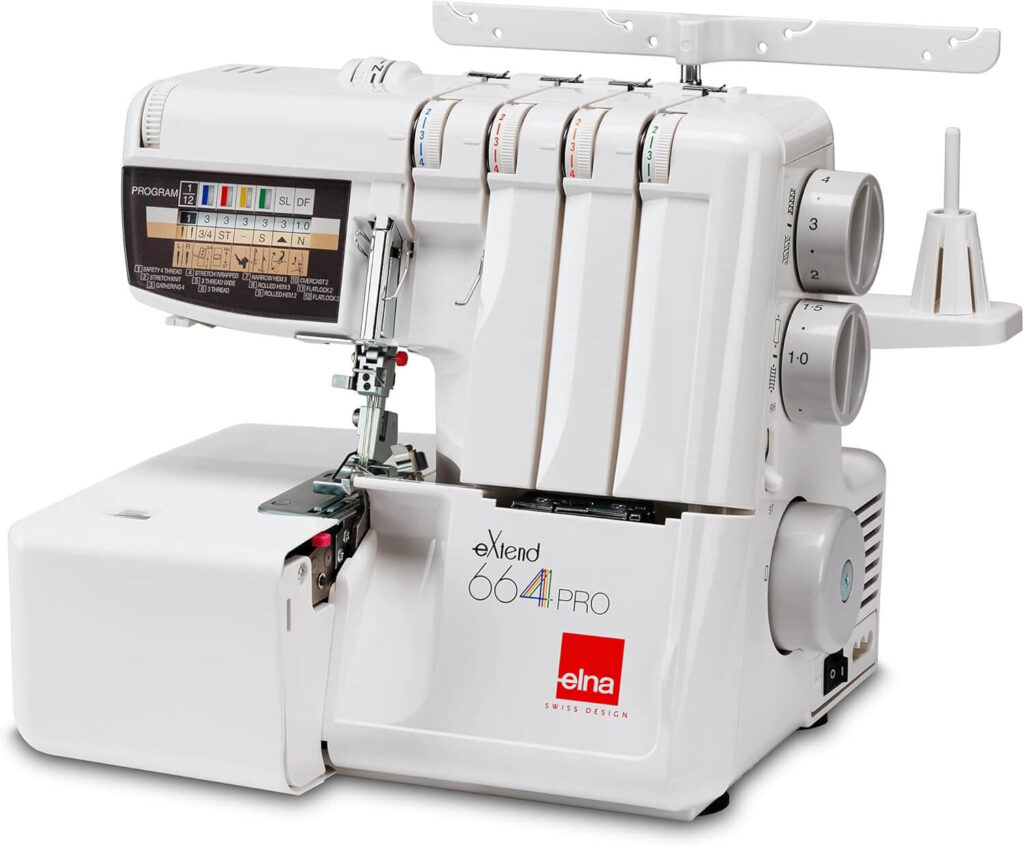
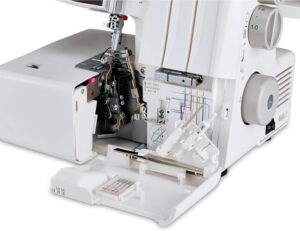
Elna is a Swiss brand that’s been around since 1940. What most people in the industry know — and most buyers don’t — is that Elna and Janome share engineering roots. So the mechanical quality here is solid, on par with what Janome delivers.
What sets the 664PRO apart from everything else on this list is something I genuinely haven’t seen done this well elsewhere at this price: a built-in stitch reference panel printed on the front of the machine, showing recommended settings for 12 different stitch types. That means when you want to switch from a 4-thread overlock to a rolled hem to a flatlock, you don’t dig out the manual. You look at the machine. For anyone still building experience, that’s not a gimmick — it’s a real time-saver that you’ll use constantly.
Two-three-four thread capability, differential feed, free arm. The machine also ships with 40 cones of serger thread included, which is genuinely rare. Serger thread comes on larger cones than regular sewing thread, and it’s one of those things first-time buyers don’t think about until they sit down to sew. Elna takes care of it upfront.
Price: Around $350–400 on Amazon.
Pros: On-machine stitch reference panel, 2-3-4 threads, Janome-level build quality, 40 cones of thread included, detailed accessory kit.
Cons: Lower looper threading takes a bit more practice than the Brother. Nothing difficult — just less intuitive at first. Watch a setup video once and you’ll be fine.
Best for: Sewers who want more features and appreciate having information at a glance without opening a manual.
5. Juki MO-644D — Best for Serious, High-Volume Home Sewing
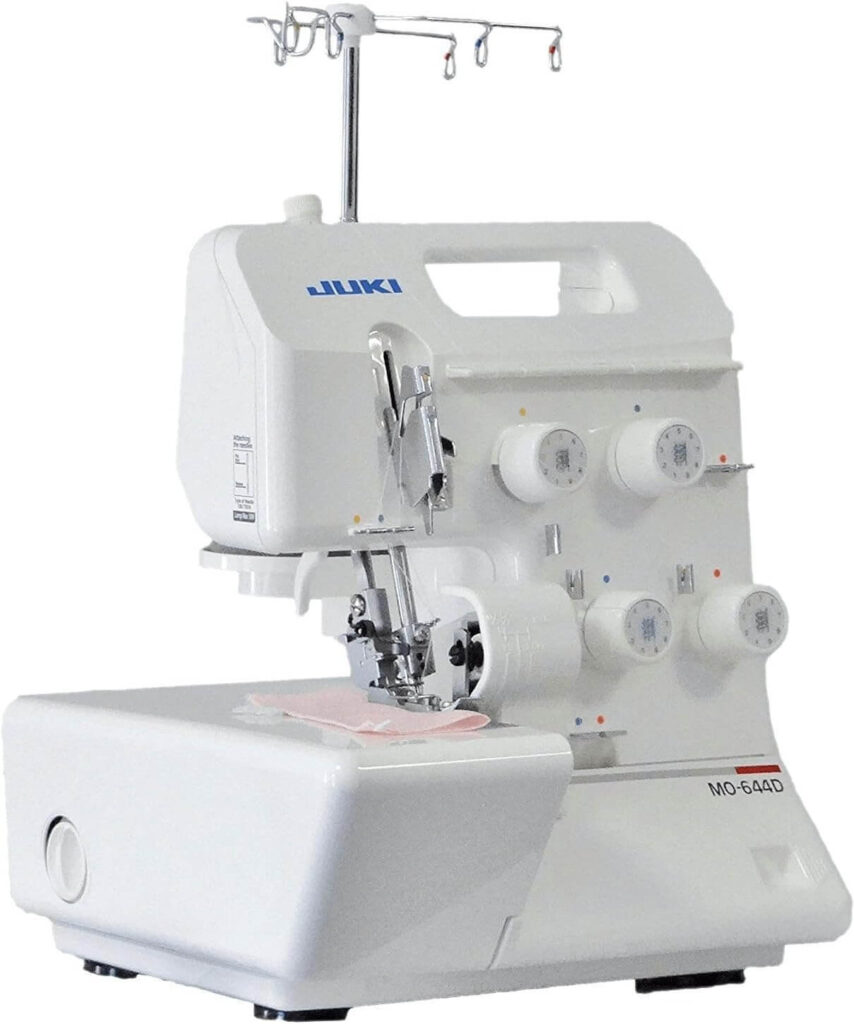
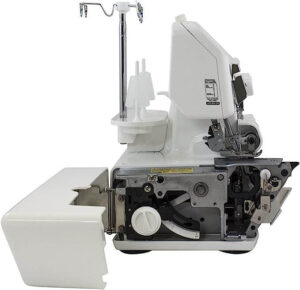
Juki built their name on industrial machines, and you can feel that background in the MO-644D. It runs at 1,500 stitches per minute — faster than everything else on this list — and the mechanism is smooth, quiet, and stable in a way that puts machines like the Singer to shame at a comparable price point.
Two-three-four thread capability, differential feed, solid construction throughout. This is the machine you buy when you sew several hours a week and want something that will simply work, year after year, without becoming a project in itself.
From my experience on the repair side: Juki sergers come in for routine maintenance. Not catastrophic failures. Not recurring problems. Routine maintenance. That’s the best endorsement I can give any machine.
Price: Around $300–380 on Amazon — price fluctuates, so it’s worth watching.
Pros: Fastest on the list at 1,500 spm, industrial-grade reliability, smooth and quiet operation, built to last.
Cons: Threading isn’t as intuitive as the Brother for a first-time serger user. Watch a setup video before you sit down with it — saves you an hour of frustration.
Best for: Active home sewers who sew regularly and want a machine that won’t need attention for years.