1. Singer Heavy Duty 500 Classic — Metal, Power, No Nonsense
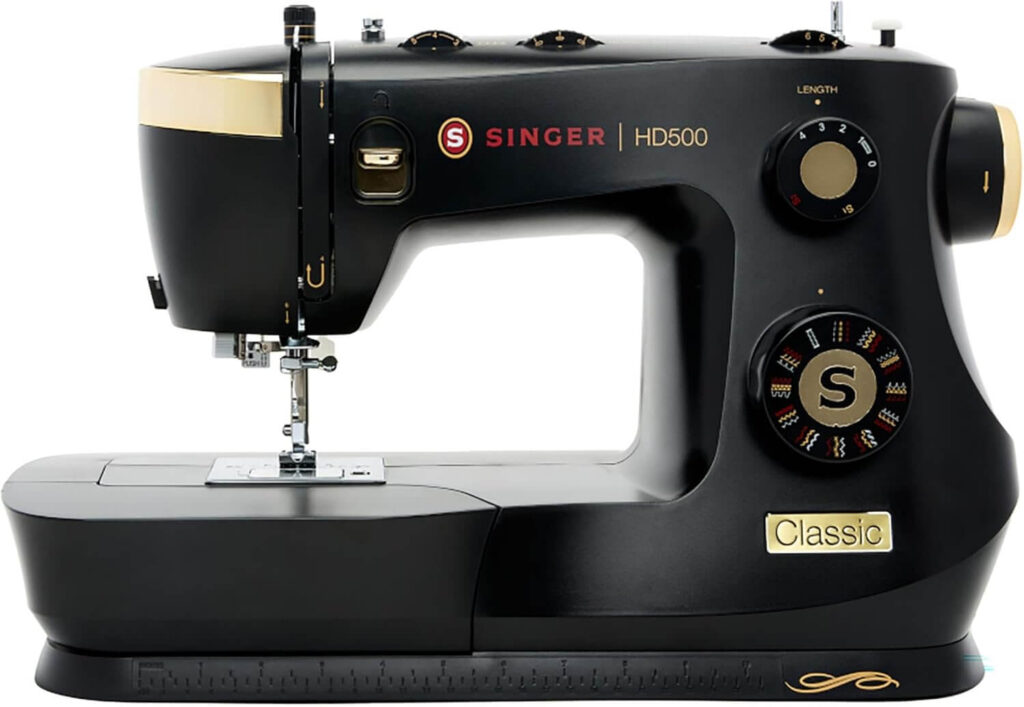
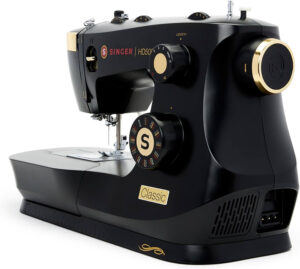
The first thing I noticed about this machine is that it looks like it means business. Black body, gold accents, rounded lines inspired by vintage Singers. But underneath that classic exterior is genuinely solid engineering.
Full metal frame, enhanced piercing power motor, speed up to 1,000 stitches per minute. Twenty-three built-in stitches — some people will say that’s not enough, but I’d say it’s exactly right. Every stitch on this machine is a stitch you’ll actually use: straight, zigzag, stretch, decorative basics, and a one-step buttonhole. No bloat, no filler.
This is a mechanical machine — no LCD screen, no computer. You select stitches with dials. For me, that’s a feature, not a limitation. Less electronics means less that can go wrong. Fifteen years from now, any competent technician will be able to service it without proprietary software.
The accessory kit includes an all-purpose foot, zipper foot, buttonhole foot, blind hem foot, satin stitch foot, four bobbins, needles, and a soft cover. Everything you need to start sewing immediately.
Honest downside: Twenty-three stitches is intentionally minimal. If you want embroidery patterns or multiple buttonhole styles, look at the Singer 6800C instead. This machine is also on the louder side compared to computerized models — that’s normal for a powerful mechanical motor, but worth knowing.
Best for: Women who sew regularly, work with heavier fabrics, and want a straightforward machine that will last for years without drama.
Singer Heavy Duty 500 Classic on Amazon (affiliate link)
2. Janome HD-3000 Black Edition — Nine Years Later, Still Going Strong
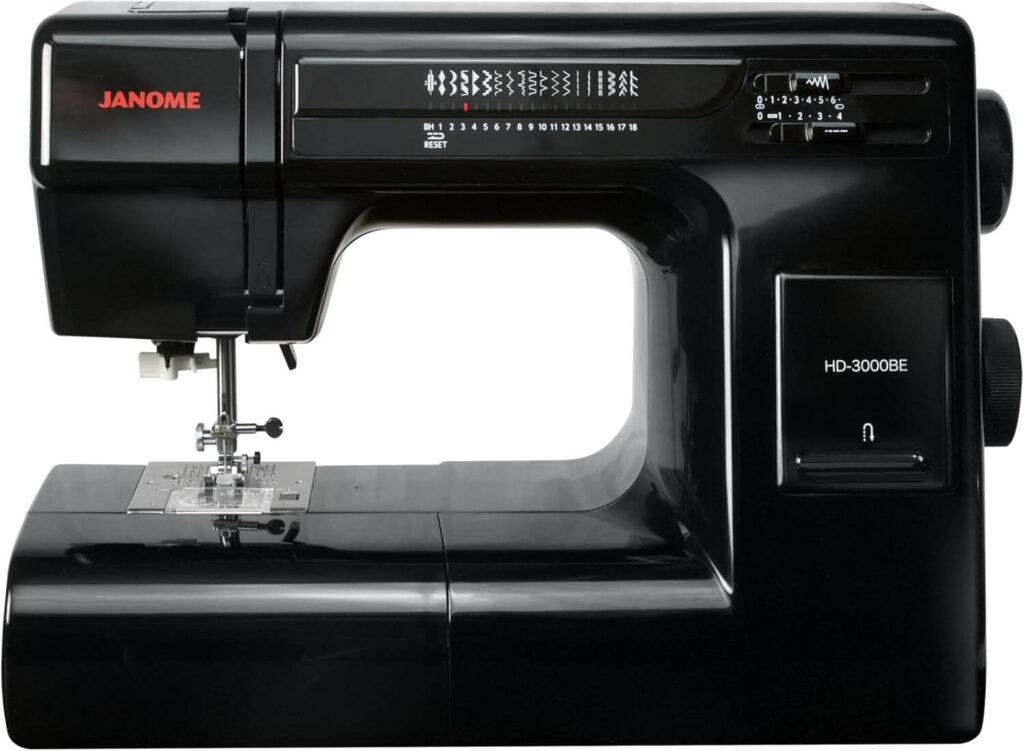
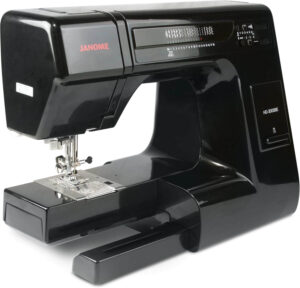
Here’s the one fact you need to know about the Janome HD-3000: people buy it, use it daily for nine or ten years, and then write reviews saying it’s still going. As a mechanic, that’s the best endorsement I know.
The Black Edition is the same HD-3000, dressed up in black with a serious bonus accessory package: an Ultra Glide foot for slippery fabrics, an Even Feed/Walking Foot for multiple layers, a free-motion quilting foot, an open-toe foot, and a ¼” seam foot for quilting blocks. Those are genuinely useful additions — each one would cost you extra money separately.
Heavy-duty aluminum body, not plastic. Eighteen stitches, all practical. The three-piece feed dog system handles any fabric evenly. Remove the storage tray and you’ve got a free arm for sleeves, cuffs, and tight spaces.
What I notice as a mechanic: The HD-3000 has very few plastic internal components. That means fewer parts that wear out or become brittle over time. It’s one of the main reasons these machines last as long as they do.
Honest downside: Eighteen stitches really is a modest selection. If you want decorative variety or more buttonhole styles, the Janome JW8100 gives you significantly more. This is also a mechanical machine with no digital interface — the learning curve is gentle, but it’s worth knowing what you’re getting.
Best for: Sewers who work frequently, value reliability above all else, and want a machine that just works — every time, without fuss.
Janome HD-3000 Black Edition on Amazon (affiliate link)
3. Janome JW8100 — Computerized Janome Reliability With Room to Grow
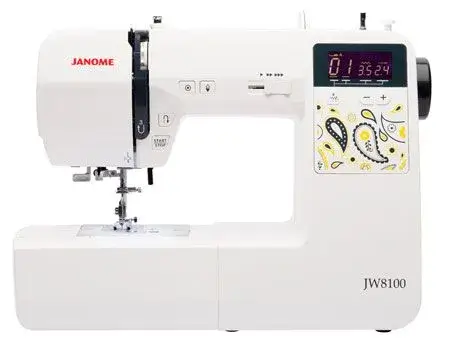
If the HD-3000 is a quiet workhorse, the JW8100 is that same Janome dependability with a computer added — and a lot more creative range.
One hundred built-in stitches, seven buttonhole styles, extension table, hard cover included. Twenty-two accessories right out of the box — more than most competitors at this price. The LCD display shows the stitch number and recommended settings, which is genuinely helpful when you’re still learning what everything does.
Speed tops out at 820 stitches per minute. The Superior Plus Feed System — Janome’s proprietary design — keeps fabric moving evenly, which is a big deal for quilting and multilayer projects. That feed system is part of why Janome machines hold up better than most in daily use.
What I notice as a mechanic: The underlying mechanism quality is consistent across Janome’s lineup — whether mechanical or computerized. The difference is convenience and stitch variety, not build quality. Service access is logical and straightforward.
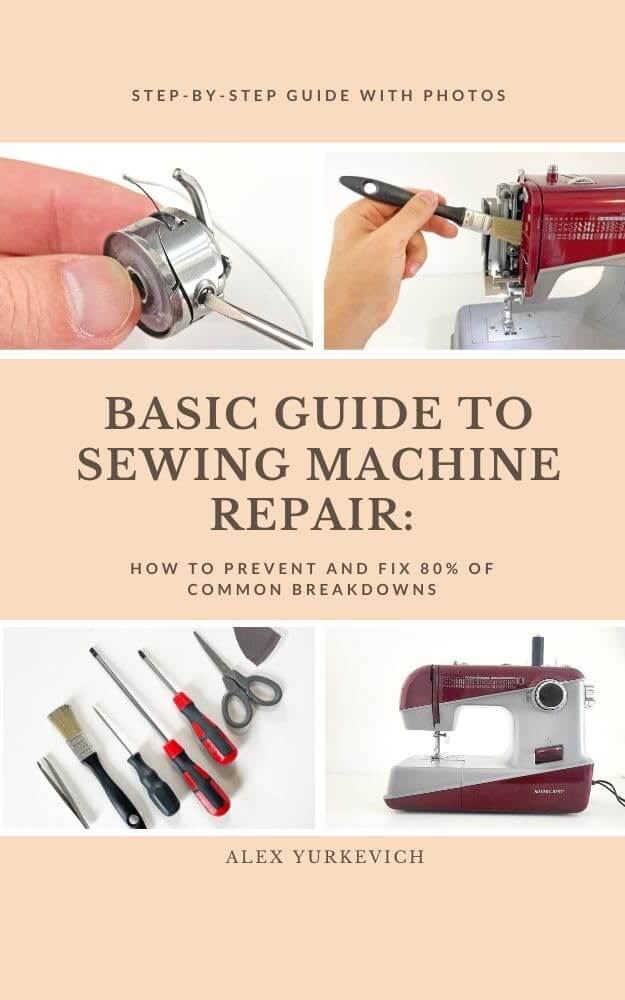
Speaking of maintenance — keeping any machine in this range running well comes down to a few basic habits: cleaning the bobbin area regularly, using quality thread, and oiling the right points at the right time. I cover all of that in my guide, Basic Guide to Sewing Machine Repair, written specifically for home sewers who want to handle the basics themselves.
Honest downside: The JW8100 is slightly heavier and pricier than the HD-3000. If you carry your machine to classes regularly, factor in the weight.
Best for: Sewers who want computerized convenience without giving up Janome’s reputation for reliability. A great machine for anyone building their skill set and wanting to grow into new techniques.
Janome JW8100 on Amazon (affiliate link)
4. Singer Heavy Duty 6800C — Heavy-Duty Power Meets Computerized Control
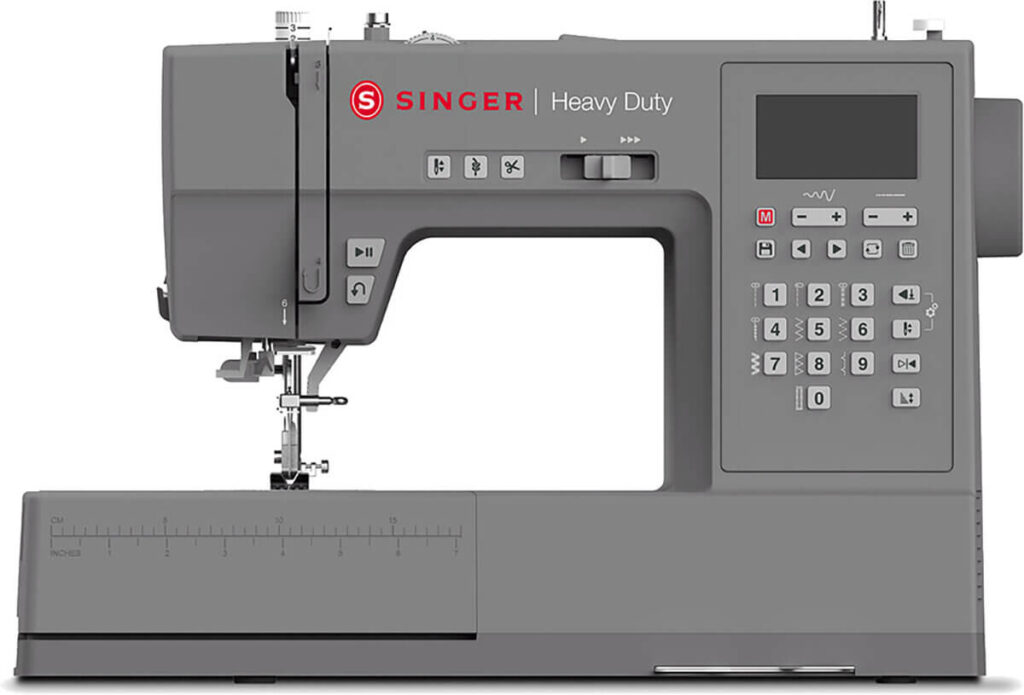
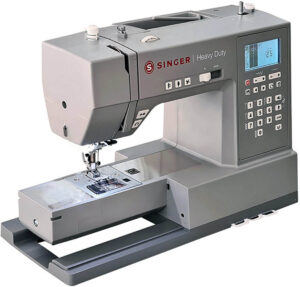
The 6800C is Singer’s attempt to combine the raw strength of their Heavy Duty line with the convenience of computer-controlled stitching. And honestly? It works pretty well.
Motor that’s 60% stronger than standard, speed up to 1,100 stitches per minute, full metal frame, stainless steel bed plate. The machine advertises 586 stitch applications — important to understand that this isn’t 586 separate stitches. It’s combinations of a core set of stitches used in different techniques. Still a wide range, but don’t let the number confuse you.
The LCD screen displays your selected stitch, recommended presser foot, and optimal width and length settings. Automatic thread cutter — press a button and both threads are cut. Nine one-step buttonhole styles. The throat space (needle to tower) is 6.4 inches, which is solid for a home machine. Ten presser feet included, with a walking foot and open-toe foot in the mix.
What I notice as a mechanic: This is a well-balanced machine for the price. Singer’s electronics at this level are more reliable than their budget models. That said, computerized machines are more involved to repair than mechanical ones — ten or fifteen years down the road, control board availability can become an issue. That’s an honest trade-off, not a deal-breaker.
From real user feedback: the machine handles denim, canvas, and multiple layers well — exactly what it was designed for. The thread cutter button and programmable needle position are the features people mention using every single day.
Honest downside: A few users report inconsistent lower-stitch tension when working with very dense synthetic materials like vinyl or multiple layers of faux leather. Tension adjustment helps, but it’s worth noting for specialty projects.
Best for: Sewers who need heavy-duty power plus the comfort of digital controls. A strong pick for costume makers, home décor projects, and anyone who sews through thick or layered fabrics regularly.
Singer Heavy Duty 6800C on Amazon (affiliate link)
5. Bernette B35 — Swiss Design, No Computer Required
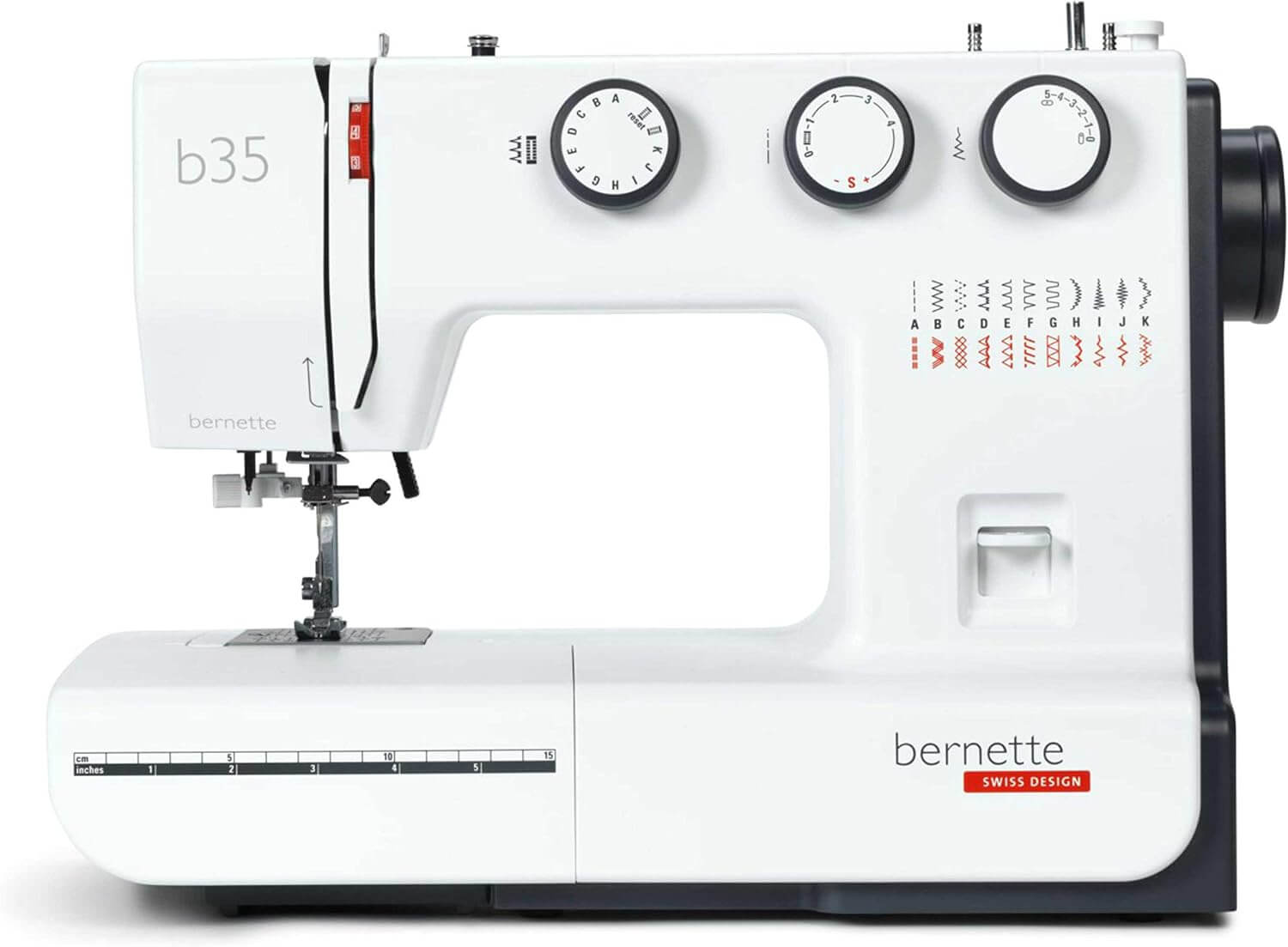
Bernette is the accessible line from Bernina — one of the most respected Swiss sewing machine makers in the world. The B35 is an honest mechanical machine: no computer, no LCD screen, just three control knobs. Stitch pattern, stitch length, stitch width. That’s it.
Twenty-three stitches, seven presser feet, automatic one-step buttonhole, manual thread tension you can adjust mid-seam. Speed up to 860 stitches per minute. The two-step presser foot lift gives you extra clearance for thick layers, which matters more than people realize.
One thing that sets the B35 apart from most machines in this list: it uses a front-loading bobbin system rather than a top drop-in. Some sewers prefer this, some find it less intuitive — just something to be aware of going in.
What I notice as a mechanic: The B35 gives easy access to the mechanism — any technician can service it without specialized knowledge. Bernette is manufactured in Asia under Swiss quality oversight, which puts it a step above most budget-brand machines in terms of build consistency.
Compare it directly to the Singer HD500 Classic: Singer has more piercing power and slightly higher speed. Bernette has a better presser foot selection right out of the box and a cleaner one-step buttonhole. Different priorities, both solid choices.
Honest downside: The throat space is on the smaller side — not ideal for large quilting projects. A couple of users have mentioned a slight height difference between the accessory tray and needle plate. Minor, but worth knowing.
Best for: Beginners who want a simple, reliable mechanical machine with European design pedigree. Also a good pick for anyone who’d rather avoid dealing with software, touch screens, and firmware updates.
Bernette B35 on Amazon (affiliate link)
6. Necchi Q132A — Italian Character in a Mechanical Frame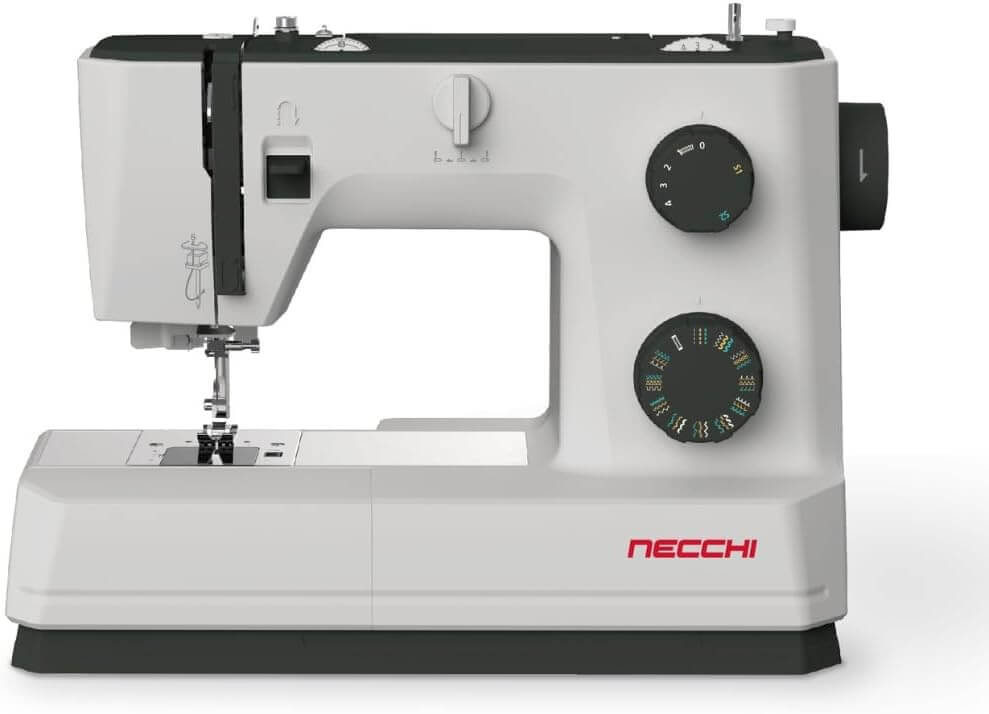
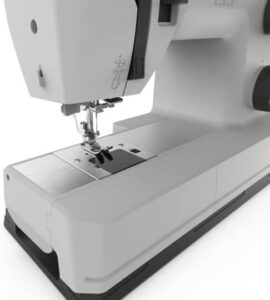
Necchi is an Italian brand with a long history. The Q132A is a mechanical machine with a full metal frame, stainless steel bed plate, and a motor that reaches 1,000 stitches per minute. Thirty-two built-in stitches, one-step buttonhole, automatic needle threader, top drop-in bobbin system.
The extension table is included in the box — which is genuinely unusual for a mechanical machine at this price. Also included: all-purpose foot, zipper foot, buttonhole foot, button sewing foot, seam guide, needles, and even a bottle of machine oil. That last detail tells you something about how this machine was designed: the manufacturer expects you to maintain it.
Adjustable presser foot pressure is present — a feature missing from several competitors in this range. It lets you work comfortably on everything from very delicate fabrics to heavy multilayer projects, just by changing the pressure setting.
What I notice as a mechanic: The bobbin access is clean and intuitive, threading is logical. Users who teach sewing professionally have mentioned choosing the Q132A specifically because it holds up to intensive daily use. That tracks with what I see in the build quality.
Honest downside: Necchi isn’t as widely distributed as Singer or Janome in the US. Finding a specialist for service in a smaller city could be harder. Parts are available, but it’s worth factoring in if you’re in a rural area.
Best for: Sewers who want a mechanical machine with a wider stitch selection (32) and appreciate that the extension table is included without extra cost. A good choice if you want a little more versatility without going computerized.
Necchi Q132A on Amazon (affiliate link)
7. Elna Explore 320s — For Sewers Who Know What Really Matters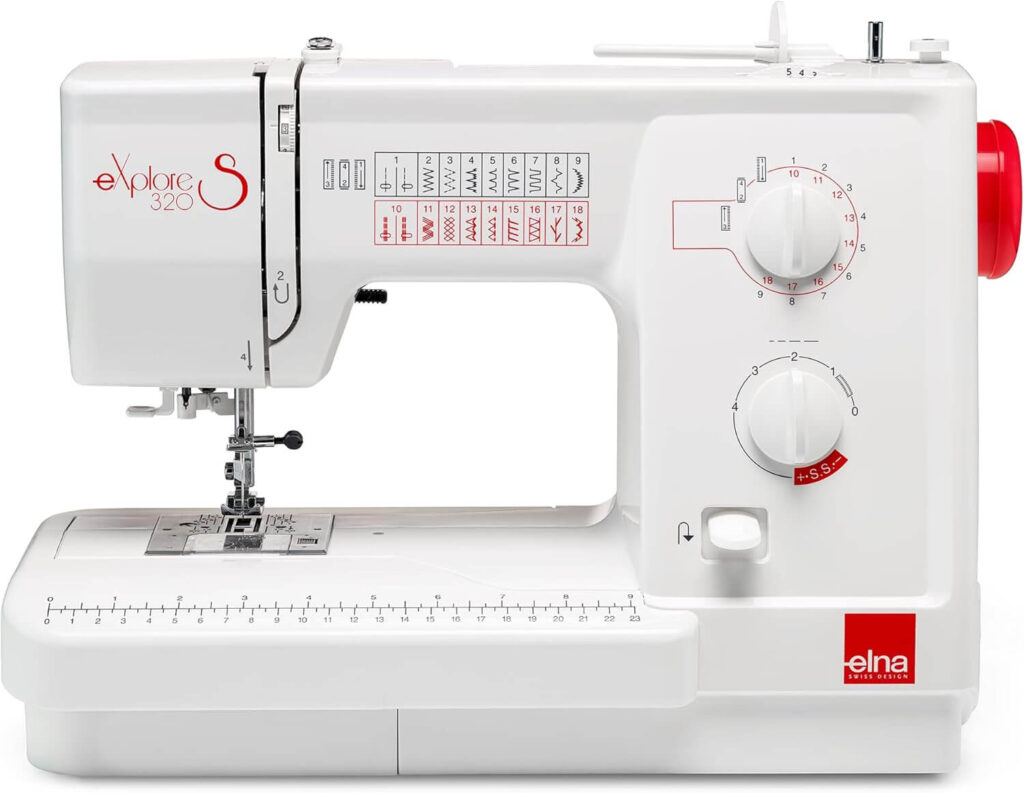
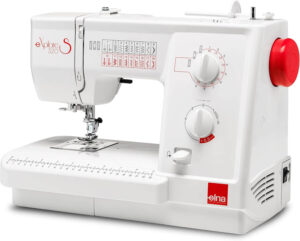
Elna is a Swiss brand with decades of reputation. The Explore 320s is a mechanical machine with 19 stitches — utility, stretch, and decorative — a wide sewing bed, and a jam-proof top-loading bobbin system.
Transparent bobbin cover lets you monitor thread without stopping. Free arm for sleeves and cuffs. Built-in needle threader. Speed up to 860 stitches per minute. Clean, straightforward, European.
What Elna doesn’t compete on is stitch count. Nineteen stitches is deliberately modest. What the brand does compete on is stitch quality — consistency, thread tension stability, and the feel of the machine in daily use. The Swiss engineering approach prioritizes how the machine performs over how many features it lists.
What I notice as a mechanic: Elna has been part of the Janome family for years, which means the manufacturing base is solid and parts are reasonably accessible. The mechanism is reliable, service access is standard, and the machine behaves predictably — which is exactly what you want.
Honest downside: Nineteen stitches is genuinely limited. If you want decorative variety, the B35 or Singer 6800C will serve you better. The Elna is for sewers who understand that stitch quality beats stitch quantity — and who are willing to trade feature count for consistency.
Best for: Experienced sewers who’ve been around enough machines to appreciate when one just feels right. If you’re the kind of person who’d rather have a machine that does 19 things beautifully than 100 things adequately, this is worth considering.
Elna Explore 320s on Amazon (affiliate link)