What Is a Serger?
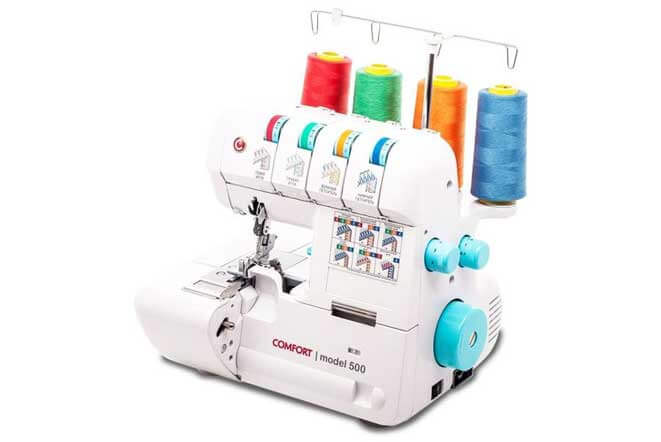
A serger — also called an overlock machine — is a specialized sewing machine built to finish the raw edges of fabric. In a single pass, it does three things at once: trims the excess fabric edge, wraps it tightly with thread, and locks it so the fabric can’t fray.
On a regular sewing machine, you sew your seam first, then go back and finish the edges separately — usually with a zigzag stitch. It works, but it’s slow and the result isn’t as clean or durable. A serger handles all of that automatically, faster, and with a result that looks like it came out of a real garment factory.
That’s exactly why every production facility in the world runs sergers right alongside regular machines. They’re not the same tool. They work as a team.
How a Serger Works — From the Inside
This is where most explanations either get boring or skip over the important part. Let me try to make it actually useful.
A regular sewing machine uses two threads: one on top, one in the bobbin underneath. They meet inside the fabric and create a stitch. Simple, clean, easy to understand.
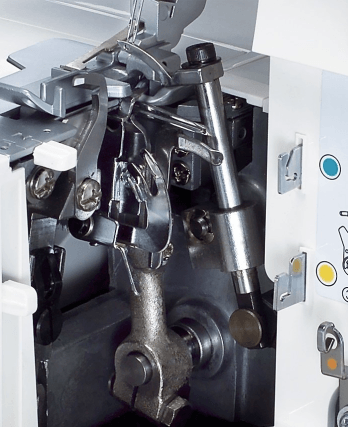
A serger has no bobbin. None. Instead, it uses loopers — curved metal pieces that move in complex paths and pass threads back and forth between each other. Those loopers are what create the characteristic chain of thread that wraps around the fabric edge. They’re also the parts I spend the most time adjusting and replacing, for what it’s worth.
How Many Threads Does a Serger Use?
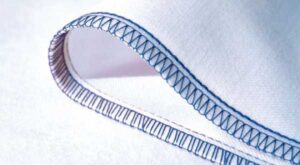
A standard home serger runs on 3 or 4 threads simultaneously. Each thread sits on its own cone on top of the machine.
| Mode | Threads | What It’s Used For |
|---|---|---|
| 2-thread | 2 | Light edging, delicate decorative stitches |
| 3-thread | 3 | Knit and stretch fabrics, lightweight seams |
| 4-thread | 4 | Strong seam + edge finish in one pass |
| 5-thread | 5 | Industrial and professional machines |
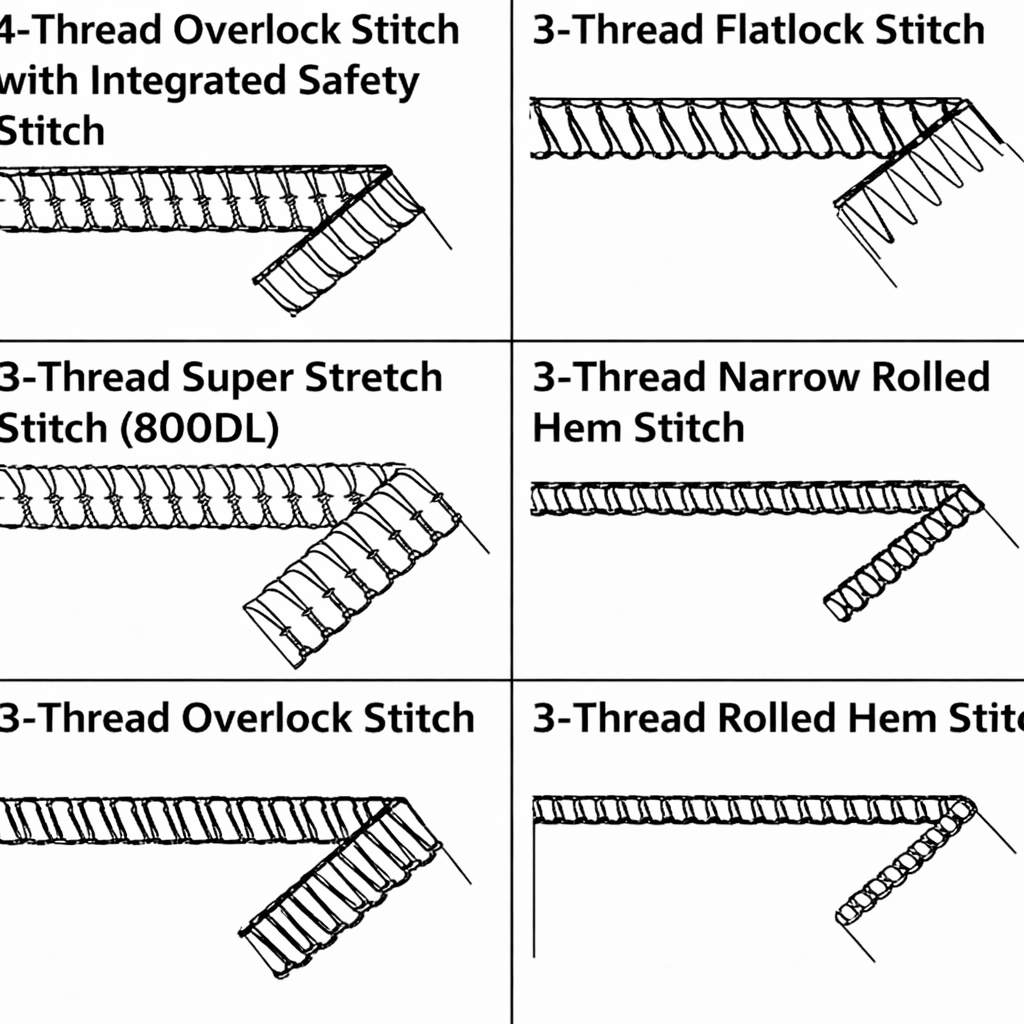 For home sewing, 3–4 threads covers about 95% of everything you’ll ever need. Don’t let anyone convince you that you need a 5-thread machine to start out.
What’s the Knife For?
Most sergers have a built-in blade — a small knife that trims the fabric edge right before the needle and loopers do their work. That’s what makes the edge perfectly straight and lets the thread wrap tightly around it without any loose fabric underneath.
The knife can be retracted on most machines. When you want a decorative stitch without cutting the edge, you simply fold the blade out of the way. No tools needed.
Serger vs. Sewing Machine: What’s the Difference?
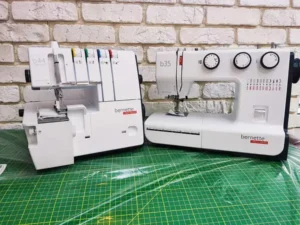 The single most important thing to understand: a serger cannot sew a straight stitch. It has no bobbin, no mechanism for a standard lockstitch. It won’t insert a zipper, sew a buttonhole, or topstitch a collar.
What it does — finishing raw edges quickly, cleanly, and with real elasticity — a regular machine simply can’t do as well.
| Feature | Sewing Machine | Serger |
|---|---|---|
| Thread count | 2 | 3, 4, or 5 |
| Has a bobbin | Yes | No |
| Straight stitch | Yes | No |
| Edge finishing | Limited (zigzag) | Professional quality |
| Speed | 700–900 spm | 1,300–1,500 spm |
| Works with knit/stretch | Poorly | Excellently |
| Replaces the other | No | No |
The bottom line: you need both. A serger doesn’t replace your sewing machine — it works alongside it. The sewing machine builds the garment. The serger makes the inside of it look like it was made professionally.
If you only have one machine right now, start with a regular sewing machine. Get comfortable. Then add a serger when you start feeling the limitations — and you will feel them.
What Do People Actually Use a Serger For?
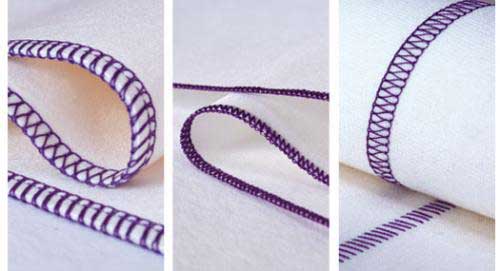
Theory is fine, but let’s get practical. Here’s what a serger actually gets used for in home sewing.
Finishing Seam Allowances
This is the bread and butter. You stitch your seams on the regular machine, then run each seam allowance through the serger to clean it up. Takes a few seconds per seam. The inside of your garment looks neat, and the fabric won’t fray after washing — even on fabric that normally sheds badly.
Sewing Knit and Stretch Fabric
This is where a serger is truly irreplaceable. T-shirts, leggings, jersey dresses, activewear, kids’ clothes — all of it needs a seam that stretches with the fabric. A straight stitch on a regular machine will simply break the first time someone puts on that shirt and raises their arms. A serger stitch is built to move.
I’ve seen dozens of knit garments brought in for rework because they were sewn on a regular machine. The seams were blowing out, the fabric was distorting. A serger solves that problem from the beginning.
Rolled Hems
Most sergers can produce a narrow, tight rolled hem — perfect for chiffon, organza, and other lightweight fabrics. Getting that same result on a regular machine is genuinely difficult. By hand, it takes forever. On a serger, it takes seconds.
Speed
Sergers move fast — 1,300 to 1,500 stitches per minute. That’s nearly double the speed of most home sewing machines. If you sew regularly, the time savings add up quickly.
What Is Differential Feed and Why Does It Matter?
This is the feature that rarely gets explained clearly, so let me give it a proper shot.
A serger has two sets of feed dogs — front and back. Differential feed lets you adjust how fast those two sets move relative to each other. In plain language, that control is what keeps your fabric behaving while it moves through the machine.
When you sew knit fabric, it tends to stretch under the presser foot. By running the front feed dogs slightly faster than the rear ones, the machine gently eases the fabric as it feeds — preventing that stretched, wavy seam you’d otherwise get.
The reverse works too. Slow down the rear feed dogs enough, and the machine will gather fabric as it sews — creating a soft ruffle without a single hand stitch.
This is not optional. Any serger you buy for home sewing should have differential feed. Every machine on my recommended list has it. If a serger doesn’t have this feature, walk away.
Is a Serger Hard to Use?
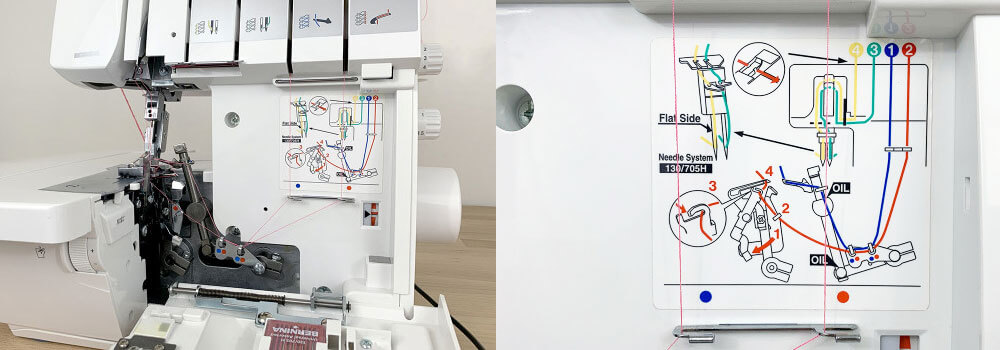
Honest answer: threading a serger for the first time is harder than threading a regular sewing machine. You’ve got four cones, color-coded paths, and a lower looper that will test your patience. The first time might take you 20–30 minutes.
Here’s the thing though — after a week of regular use, most people thread their serger without thinking about it. It becomes muscle memory, just like anything else. Good machines help: color-coded guides, threading diagrams printed right on the machine body, and easy looper access all make a real difference. I’ll point those things out when I cover specific models.
Does a Serger Need Maintenance?
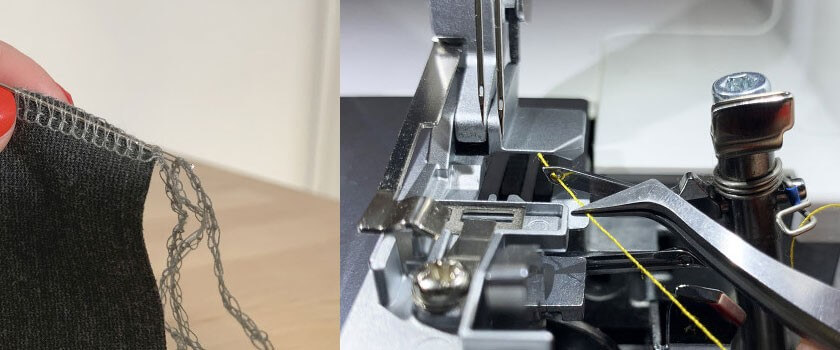
Yes, and this is something I feel strongly about. Most of the sergers that come into my shop with real problems haven’t been oiled in years. A serger runs at high speed, with a lot of moving parts in close contact. Without lubrication, those parts wear down fast.
Basic upkeep isn’t complicated: brush out thread lint and fabric debris after every use, and oil the machine every few months depending on how often you sew. If you want a clear walkthrough of how to maintain your sewing equipment — sergers included — my guide Basic Guide to Sewing Machine Repair has a full section on preventive maintenance written for home sewers, not technicians. Most of it you can handle yourself in under thirty minutes.
Do You Actually Need a Serger?
I’ve been answering this question for two decades. Here’s the honest version.
You probably need a serger if:
- You sew knit or stretch fabrics — T-shirts, leggings, anything jersey
- You want the inside of your garments to look professionally finished
- You sew regularly and want to work faster
- You work with fabrics that fray badly
You can probably wait if:
- You’re still getting comfortable with your regular sewing machine
- You sew only a few times a year
- You work exclusively with tightly woven, non-stretchy fabrics
- You don’t care about how the inside of a garment looks
There’s no point buying a serger because someone said you should. Buy it when you hit the wall where your regular machine can’t do what you need. That moment will come naturally — and when it does, you’ll know exactly what you’re looking for.
The Bottom Line
A serger is not a complicated mystery machine, and it’s not an unnecessary luxury. It’s a specialized tool with one clear job: finish fabric edges fast, clean, and professionally. It’s irreplaceable for knit fabric. It makes every woven garment look better on the inside.
It doesn’t replace your sewing machine. It works with it. And once you start using one regularly, you’ll wonder how you managed without it.
Ready to Choose a Serger?
Now that you know how this machine works, the next question is which one to buy. I put together a separate, honest breakdown of the five best sergers for home sewing — Brother, Janome, Singer, Elna, and Juki. Real pros and cons for each model, a side-by-side comparison table, and a clear recommendation based on skill level and budget. No padding, no vague praise.
👉 Read: Top 5 Best Sergers for Home Sewing — A Mechanic’s Review
About the Author
Alex is a sewing machine mechanic with over 20 years of hands-on experience servicing domestic and industrial machines. He spent five years working as a mechanic at a garment factory before launching his own repair and equipment business. Alex creates practical, no-fluff educational content for home sewers — drawing on real workshop experience rather than spec sheets. He is the author of the Kindle guide Basic Guide to Sewing Machine Repair: How to Prevent and Fix 80% of Common Breakdowns, available on Amazon.