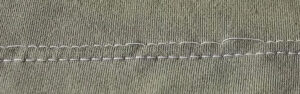
Most Common Reasons Your Sewing Machine Skips Stitches
1. Damaged or Wrong Needle
This is the #1 cause.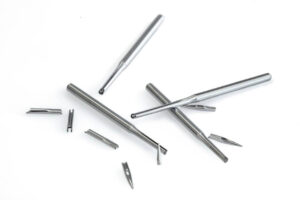
Problems occur when:
- the needle is dull
- the needle is bent
- the wrong type of needle is used
- the needle is installed incorrectly
- the needle doesn’t match the fabric
Examples:
- universal needle on knit fabric → skipped stitches
- thick needle + lightweight fabric → skipped stitches
- thin needle + thick thread → skipped stitches
Many beginners also confuse household and industrial needles. Household needles have a flat side; industrial needles are round. Using the wrong one changes the geometry and affects stitch formation.
Fix: Replace the needle with a new one that matches your fabric.
2. Incorrect Needle-to-Hook Timing or Gap
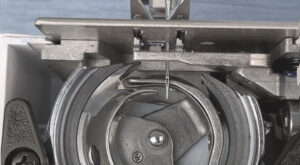
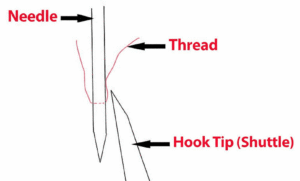
If the hook passes too far from the needle, it won’t catch the loop.
Typical reference values:
- gap between needle and hook: up to 0.3 mm
- hook tip slightly above needle eye: about 1.5–2 mm
- needle lifted about 2 mm from lowest point
If these are off, the machine will skip stitches.
Causes include:
- wear and tear
- needle hitting the hook
- incorrect needle
- heavy use over time
3. Poor Quality or Incorrect Thread
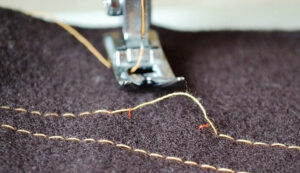
Thread quality directly affects loop formation.
Problematic threads:
- overly twisted
- old and brittle
- too thick for the needle
- fuzzy or low quality
- uneven thickness
If the loop doesn’t form properly, the hook can’t catch it.
Fix: Use good quality polyester thread that matches your needle size.
4. Wrong Needle Type for the Fabric
Different fabrics require different needles:
- Knits → Ballpoint / Stretch needles
- Denim → Jeans needles
- Leather → Leather needles
- Delicate fabrics → Microtex needles
- Universal → only for woven fabrics
Using a universal needle on knit fabric often causes skipped stitches.
5. Worn or Damaged Needle Plate
If the needle has hit the plate, burrs can develop:
- scratches
- rough edges
- damaged needle hole
Thread catches on these imperfections and prevents proper loop formation.
Fix: Replace the needle plate.
6. Incorrect Thread Tension
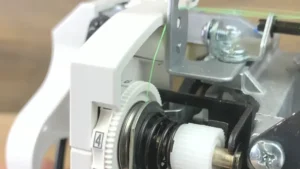
Too tight:
- loop doesn’t form properly
Too loose:
Balanced tension is essential.
7. Needle, Thread, and Fabric Don’t Match
Common mistakes:
- thin needle + thick thread
- thick needle + delicate fabric
- knit fabric + universal needle
All three must work together.
What To Do If Your Sewing Machine Skips Stitches (Step-by-Step)
Follow this checklist in order:
- Rethread the upper and bobbin thread completely
- Install a brand new needle
- Make sure the needle is fully inserted
- Replace thread with good quality thread
- Slightly loosen upper thread tension
- Check presser foot pressure
- Test stitch on cotton fabric
- Clean the bobbin area
- Inspect the needle plate
- Check needle-to-hook alignment
If the issue remains, the problem is likely mechanical.
Common Mistakes to Avoid
- Sewing with a dull needle
- Using cheap thread
- Skipping regular cleaning
- Using universal needles for everything
- Sewing thick fabrics at high speed
- Mismatching needle and thread size
Mechanic’s Tip
Change your needle every 6–8 hours of sewing — or after each project.
This is the cheapest and most effective prevention.
In my repair experience, most skipped stitch problems disappear after replacing the needle.
When You Should NOT Fix It Yourself
Contact a technician if:
- timing between needle and hook is off
- hook is damaged
- needle hit the hook
- machine makes unusual noise
- skipping happens only on zigzag stitches
- machine skips at higher speeds
These require timing adjustment.
How To Prevent Skipped Stitches
- change needles regularly
- use quality thread
- clean the bobbin area
- oil the machine as recommended
- match needle to fabric
- avoid sewing with dull needles
- take breaks during heavy sewing
FAQ
Why does my sewing machine skip stitches on knit fabric?
You are likely using the wrong needle. Use a Stretch or Ballpoint needle.
Can a dull needle cause skipped stitches?
Yes. This is one of the most common causes.
Why is my new sewing machine skipping stitches?
Usually incorrect needle, thread, or threading.
Can I adjust the hook timing myself?
It’s possible, but easy to misalign the machine without experience.
What thread works best?
Good quality polyester thread in medium weight.
Conclusion
Skipped stitches usually happen when the needle and hook fail to work together properly. In most cases, replacing the needle, using better thread, or adjusting basic settings solves the problem. If timing is off, professional adjustment is the safest option.
With the right needle, proper thread, and regular maintenance, skipped stitches can almost always be avoided.