Why Does My Sewing Machine Keep Breaking Thread? 10 Easy Fixes
Upper thread snapping again and again? In most cases the machine itself is fine.
AXAlex, sewing machine mechanic · 20 years in the trade · Updated November 2026
Upper thread keeps breaking? It’s almost always one of three things.
Cause 1Upper tension too tight
Cause 3Dull or bent needle
Cause 6Threaded with the foot down
FIXNew needle, tension back to the middle, rethread with the presser foot up.
DifficultyHome fixReading time6 minHook typeany
You’ll needa new needlegood threada small brush or anything to clean linta scrap of fabric
Go to a mechanic if the thread still breaks after a new needle, good thread and correct threading, or you hear metal hitting metal.
10 Causes and How to Fix Them
If your upper thread keeps breaking, the machine is usually fine. The cause is the needle, the thread, the tension or the threading, and most of the time you can find it in a few minutes.
Work through the list in order. The first causes are the ones I see most often in my workshop.
First, switch off
Switch off and unplug the machine before you change the needle, take out the bobbin or clean anything.
Upper Thread Tension Is Too Tight
Someone turns the dial “just a bit more,” then a bit more again, and the thread starts snapping. It’s under constant strain and eventually gives up.
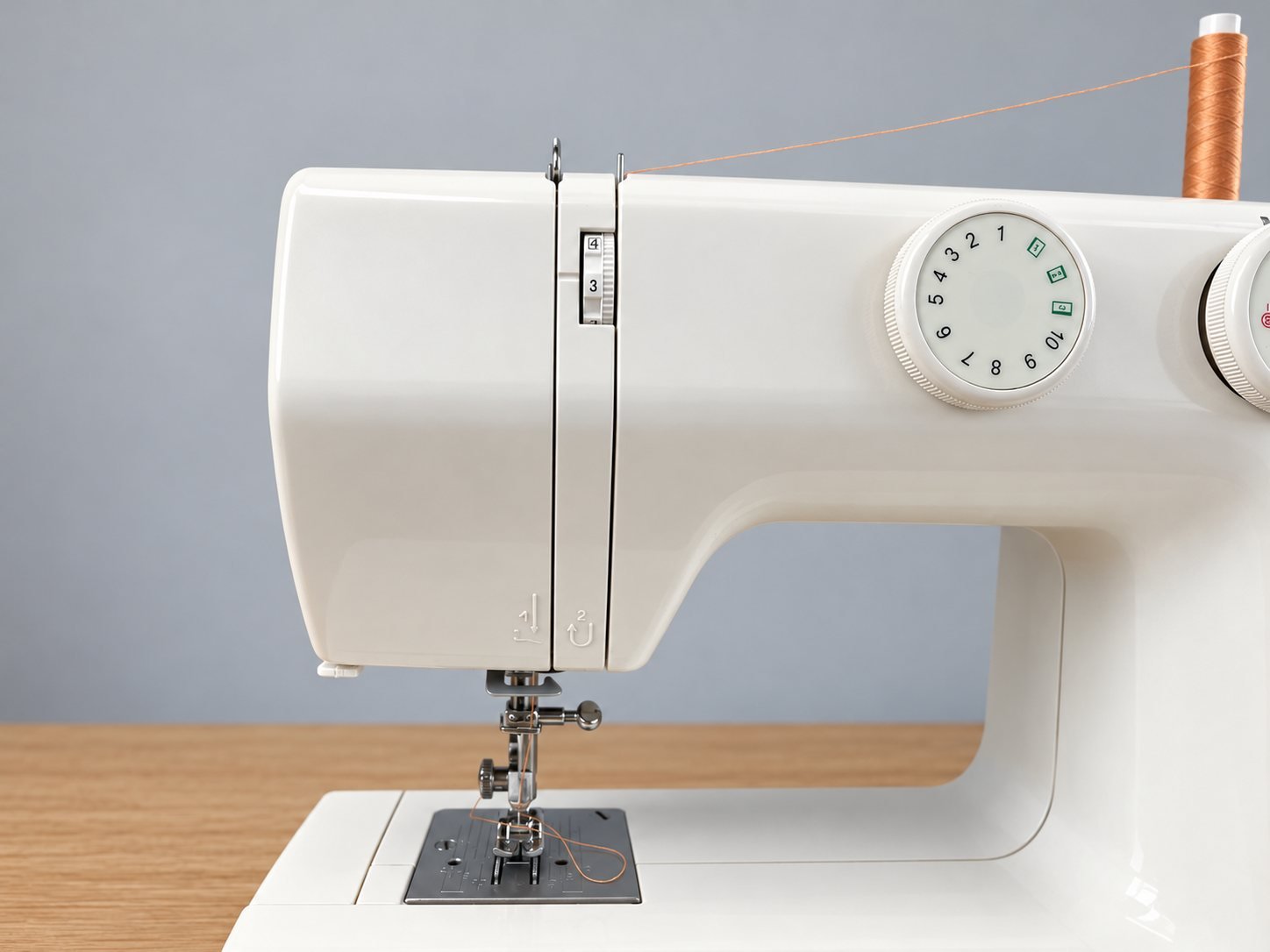
Tension dialNot this one
The upper tension dial.
FIXSet the dial back to the middle of the range, around 4 on most machines. Sew a test line on a scrap, then adjust in small steps.
Quick check
Feel the drag by hand
turn the handwheel slowly toward you
the thread feels tight and resists? That’s the cause
Computerized machine with automatic tension? First check it hasn’t been switched to manual.
Poor Quality or Old Thread
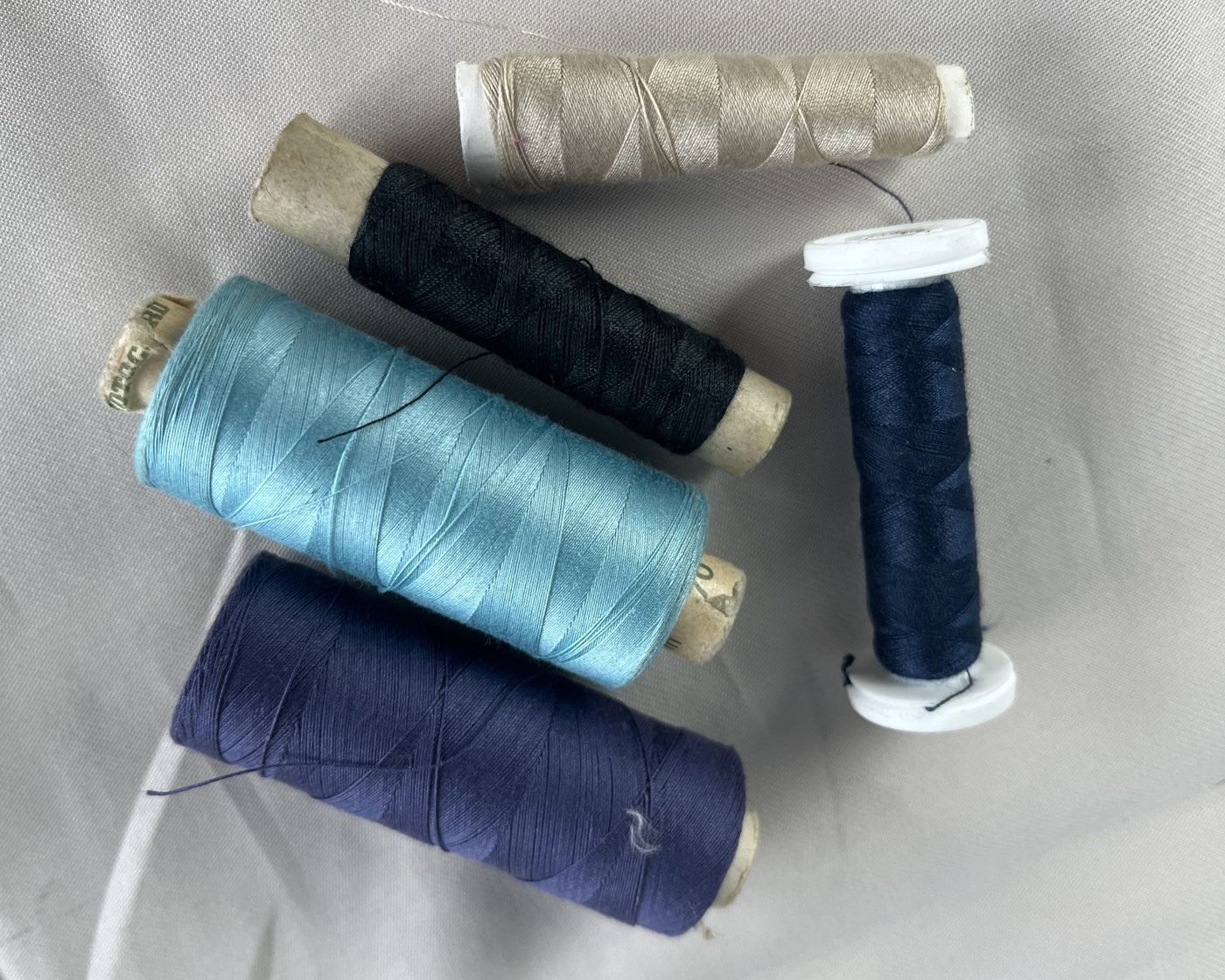
Thread can look perfect on the spool and still snap once you sew. Cheap thread and thread that has sat in a drawer for years are the usual suspects.
What not to sew with: old thread, worn cardboard cores and a cracked plastic spool.
fuzzy surface
uneven thickness
small knots or slubs
thread stored for years
Check the spool too. A cracked or chipped spool, or a spool cap that’s the wrong size, can catch the thread on every turn.
FIXSwitch to a good-quality thread. Machines come into my workshop “for repair” that only needed better thread.
For everyday sewing I use all-purpose polyester thread from Gütermann or Mettler.
Dull or Bent Needle
A needle goes dull or bends slightly long before you can see it. The thread notices right away.
Warning signs
How to tell a worn needle
thread breaks at random moments
a popping or clicking sound as you sew
skipped stitches
A slight bend is often invisible until it hits metal.
StraightBent needle
Dashed line: a straight needle goes into the center of the hole. A bent one drifts to the edge.
Cheap
Quality
Close-up of the eye. Cheap needle: rough, sharp edges. Quality needle: smooth.
Cheap needles often have rough, sharp-edged eyes that cut the thread. I only use quality needles, Organ or Schmetz.
FIXPut in a new needle. It’s always my first step in diagnostics.
Simple rule: match the needle to the fabric, then the thread to the needle (cause 9).
Incorrect Threading
If the thread isn’t seated between the tension discs, the machine can’t hold it. The thread runs in jerks and snaps. The most common slip: threading with the presser foot down.
First · Presser foot up
Golden rule: machine off, presser foot up. With the foot up, the tension discs open.
Typical household machine. Check the guide positions against your machine’s manual.
always thread with the presser foot up: that opens the discs
the thread sits firmly between the discs
every thread guide, in order, none skipped
Take your time here. One missed guide is enough to break thread.
Burrs or Rough Spots Along the Thread Path
If the needle has ever hit metal (the needle plate, hook or presser foot), it can leave a tiny burr you can’t see. The thread catches on it at every stitch.
Strike marks
Needle strike marks around the hole. The thread snags on every one.
Run a fingernail or a piece of thread along the thread path. Feel roughness? That’s likely your cause.
needle plate hole
needle eye
thread guides
presser foot
hook and bobbin case
Found a burr? Light burrs on the needle plate or hook can be polished out. But that means taking the part off, polishing it and putting it back, which is a repair job. I walk you through it in my Repair Guide (coming soon). Or take it to a mechanic.
Issues with the Bobbin Case or Hook
The upper thread breaks, but the problem is below. This happens more often than people expect.
Lint packs into the hook area and drags on the thread.
burrs on the bobbin case or hook
wrong bobbin tension
lint packed into the hook area
Bobbin tension has its own nuances. My Tension Guide (coming soon) takes you through them step by step, or a mechanic can set it for you.
Burrs
Horizontal hook: burrs on the edge of the drop-in bobbin case. The thread catches here every stitch.
Burrs
Vertical hook: burrs on the hook point. Every stitch, the thread drags over them.
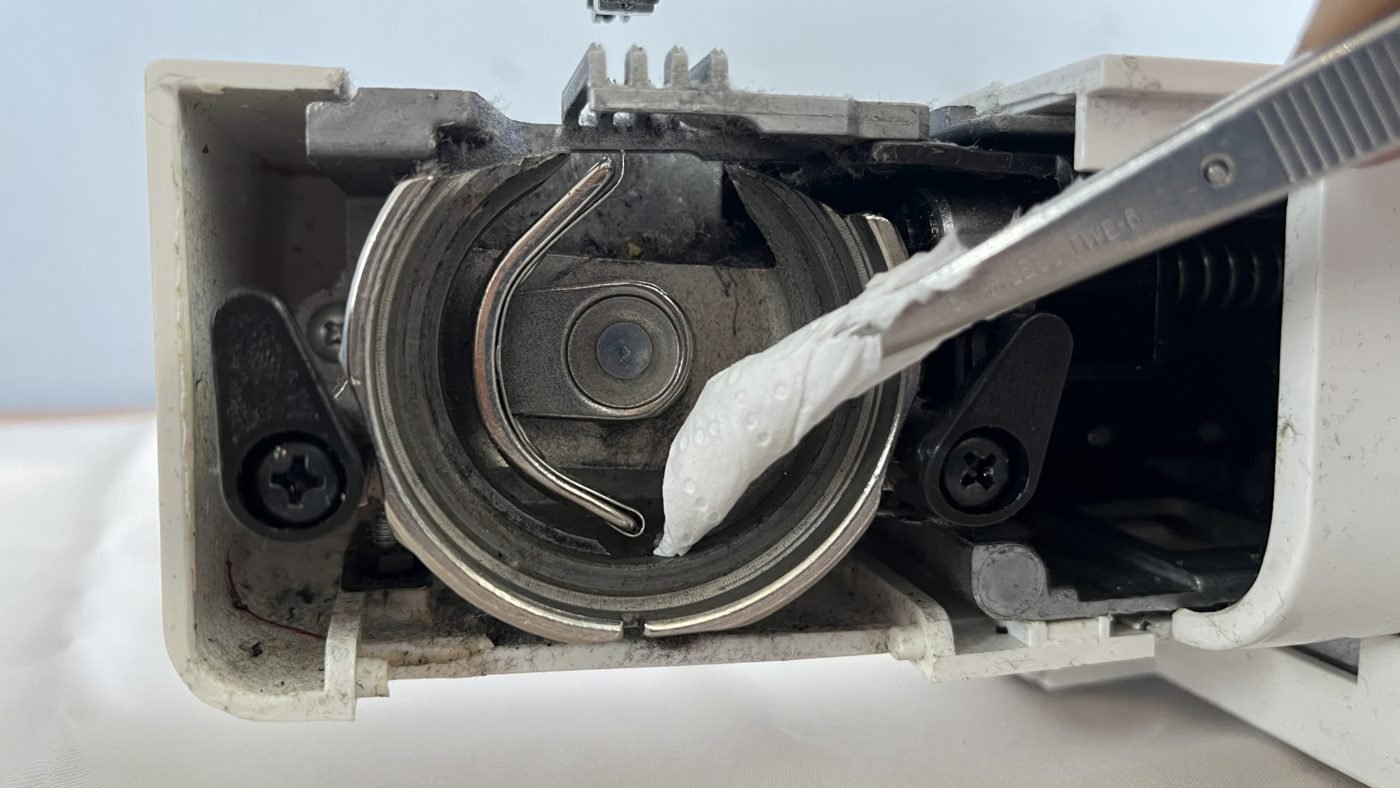
Bobbin case out: wipe the hook area clean.
FIXSwitch off, remove the bobbin and clean the lint out of the hook area. Then check the thread moves freely.
Step-by-step photos for your hook type are in my free Clean, Oil & Service Guide.
Thread too thick for the needle eye has to squeeze through. It frays and breaks.
RULEThin fabric, thin thread. Thick fabric, heavier thread and a bigger needle. For everyday sewing: all-purpose thread and an 80/12 needle.
If the thread feels like it’s dragging through the needle, check this pair.
Machine Needs Cleaning or Service
Lint, dust and old dried oil build up slowly and add friction. You won’t notice at first, but the thread will: uneven feed, wandering tension, breaks. If the fabric stops feeding altogether, see sewing machine not feeding fabric.
Needle plate off: lint packed around the feed dogs. The thread has to fight through all of this.
FIXClean and oil exactly as your machine’s manual says. Some models must not be oiled at all.
Free · by emailClean and oil your machine the right way with my free Clean, Oil & Service Guide
Possible causes: a worn hook, a faulty tension unit or timing that’s off. Don’t take the machine apart yourself.
My Advice as a Technician
Most of the time the cause is simple. Start with the needle, the thread and the tension. A calm check in order finds the problem faster than a screwdriver.
General information from a sewing machine mechanic. Always unplug the machine before you work on it. If in doubt, ask a mechanic.
Manage Consent
To provide the best experiences, we use technologies like cookies to store and/or access device information. Consenting to these technologies will allow us to process data such as browsing behavior or unique IDs on this site. Not consenting or withdrawing consent, may adversely affect certain features and functions.
Functional
Always active
The technical storage or access is strictly necessary for the legitimate purpose of enabling the use of a specific service explicitly requested by the subscriber or user, or for the sole purpose of carrying out the transmission of a communication over an electronic communications network.
Preferences
The technical storage or access is necessary for the legitimate purpose of storing preferences that are not requested by the subscriber or user.
Statistics
The technical storage or access that is used exclusively for statistical purposes.The technical storage or access that is used exclusively for anonymous statistical purposes. Without a subpoena, voluntary compliance on the part of your Internet Service Provider, or additional records from a third party, information stored or retrieved for this purpose alone cannot usually be used to identify you.
Marketing
The technical storage or access is required to create user profiles to send advertising, or to track the user on a website or across several websites for similar marketing purposes.