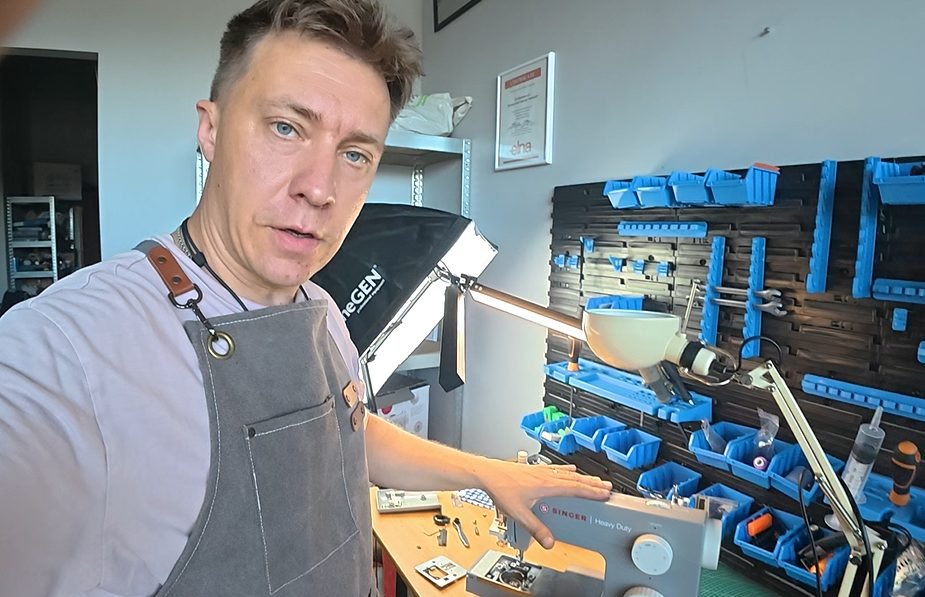
Alex, sewing machine repair mechanic · 20+ years at the bench Updated November 2026
A quick, honest note: some links in this article are Amazon affiliate links. You’re welcome to buy wherever you like. If you do buy through my links, you pay exactly the same price, and I get a small commission that helps me keep writing these guides. Thank you, I really appreciate it. As an Amazon Associate I earn from qualifying purchases.
Most reviews of beginner sewing machines are written by people who have never opened one up. This one is different.
In 20+ years of repairs, I’ve seen thousands of machines from the inside: what they look like after one year, after five, after ten. I know what breaks, what holds up, and what’s worth paying for at every price level. No brand deals and no paid spots on this list. Only the machines that end up on my bench the least.
First I’ll tell you what to look for when choosing, the things ads and salespeople don’t mention. Then 8 machines. For each one: what I see from the repair side, and how to care for it so it never ends up with me.
Budget: the realistic minimum for a beginner is around $200. Go cheaper and you’re usually buying disappointment. The biggest mistake: choosing by stitch count. You’ll use 5–6. The rest is marketing.
Why Cheap Machines Set Beginners Up to Fail
What the ads won’t tell you: most machines under $100 are made of plastic. Not just the body, the insides too. Gears, cams, the hook housing.
What happens in practice? The stitch quality is unstable from day one. Within a few months, parts wear out. You spend more time getting the machine to sew than actually sewing. And in the end you decide sewing “isn’t for you.” When the problem was never you. It was the machine.
“When one of these comes in for repair, the repair often costs almost as much as the machine. And I tell the customer honestly: it’s cheaper to buy a decent one.”
The sweet spot for a beginner: $200–500
In this range you get:
a metal frame and metal main mechanism parts;
a stable stitch on different fabrics;
enough features to grow, but not so many that you get lost;
a machine that stays useful even if sewing doesn’t become your main hobby.
Cheaper, and you’re most likely buying disappointment. Over $500 for a beginner, and you’re paying for features you won’t reach for a long time.
What Actually Matters When Choosing Your First Machine
You don’t choose a machine by stitch count or by the screen. You choose it by how it’s built inside, how easy it is to maintain, whether you can get parts for it, how reliable it is, and whether it will forgive a few mistakes.
Metal frame. The frame holds every part in the right position relative to the others. A metal frame keeps its settings for years. A plastic one shifts over time, and the needle-to-hook timing drifts sooner. A plastic outer shell is normal. What matters is what’s inside.
Hook type: horizontal or vertical. Horizontal (drop-in, bobbin on top). The bobbin drops in from above, under a clear cover. You can see how much thread is left. Easier for a beginner. Found on most modern home machines. Vertical (front-loading, bobbin case in front). The bobbin goes into a bobbin case that loads from the front. A little harder to learn, but the design is easier to adjust and service. For a first machine, a horizontal hook is more convenient. The key is easy access for cleaning.
Easy access to the hook for cleaning. Check how easily the needle plate comes off and the hook comes out. Lint under the plate causes half of all “mystery” problems: loops underneath, thread breaks, noise. If cleaning is a hassle, you won’t do it.
Adjustable presser foot pressure. Lets you set the machine for thin silk and for heavy denim. Cheap models often don’t have it, and then light fabric puckers while heavy fabric struggles to feed.
Automatic needle threader: handy, but fragile. It’s a small mechanism with a tiny hook that pulls the thread through the eye of the needle. Very handy. But it’s one of the most common small repairs in my shop: the hook bends if you pull the lever down when the needle isn’t at its highest position, or if you force it.
Parts and service. Feet, bobbins, bobbin cases and needle plates should be sold in your country. Singer, Brother, Janome, Bernette and Elna have no problem here. With a no-name machine, a year later even a mechanic can struggle to find or match the right part.
From my bench: a machine with the plastic shell off. Underneath is a metal frame that holds every part in place.Check this before you buy: the needle plate should come off easily, so you can get to the lint underneath.From my bench: lint and thread fluff packed under the needle plate of a machine that came in for repair.
Mechanical vs. Computerized: Which One Is Right for You?
MECHANICAL
Controlled with dials and levers. No screen, no electronics, no menus. Easier to learn, easier to maintain, and from the repair side far more forgiving of mistakes. Parts are everywhere, adjustments are straightforward, and with basic care they run for decades. If you’re a complete beginner, start with mechanical.
COMPUTERIZED
You pick a stitch with a button on a screen. More precision, more stitches and more convenience: automatic thread cutter, needle up/down, one-step buttonhole. The flip side: more to learn, more that can fail in the electronics, and repairs usually cost more.
MECHANIC’S TIPOne important thing from the repair side: the circuit board doesn’t like power surges or moisture. If you get a computerized machine, plug it into a surge protector and don’t store it in a damp basement or garage.
“Computerized doesn’t mean better. It means different. A well-built mechanical machine will always outlast a poorly built computerized one.”
The 8 Best Sewing Machines for Beginners
The links below are affiliate links. Your price doesn’t change. I earn a small commission, which helps me keep writing reviews like this.
As an Amazon Associate I earn from qualifying purchases.
One of the most popular beginner machines in the US, and it has earned it. Metal frame, a strong 1,100-stitch-per-minute motor, handles denim and canvas with confidence. 32 stitches, an automatic needle threader, and a presser foot that gets over several layers without a fight. No screens. Just a machine that does its job for years.
FROM MY REPAIR BENCH
“Heavy Duty” doesn’t mean “industrial.” It’s a tough home machine. The most common reason a Singer HD lands on my bench: someone forced it through something too thick. Jeans belt loops at 6–8 layers, belts, folded canvas. The needle hits the hook and the timing slips. Go over thick spots slowly, turning the handwheel by hand.
Match the needle to the fabric. On denim, use a Jeans 100/16 or 110/18, not a universal. A universal needle bends on heavy fabric and strikes the hook.
Protect the needle threader. Only pull the lever down when the needle is at its highest position.
Bobbin case / hook plate. After a needle strike it can get a small burr that later shreds the thread. If your bobbin thread keeps breaking after a broken needle, check this area.
From my bench: the edge of a plastic bobbin case after needle strikes. Nicks like these catch and shred the bobbin thread.
The 4452’s little brother. Same metal frame, same motor, same simple build. Fewer stitches and a lower price. In terms of reliability they’re nearly identical.
“If the 4452 is on sale, get it. If not, the 4432 is an excellent alternative.”
FROM MY REPAIR BENCH
Everything I said about the 4452 applies here too: don’t overload it with thickness, use the right needle, and protect the threader.
Clean under the needle plate regularly. A strong motor and high speed mean more lint and thread scraps in the hook area. Once a week of active sewing, take the plate off and brush the lint out.
Its biggest strength is versatility. It works just as well on light cotton as on heavy canvas, and at this price that’s not a given. It’s also noticeably quieter than the Singer Heavy Duty, which matters if you sew in the evening or in a shared room. Brother’s warranty and support are good.
FROM MY REPAIR BENCH
Thread with the presser foot up. The most common Brother complaint I see is “loops underneath.” 9 times out of 10 the thread missed the tension discs because the foot was down during threading.
Use Brother bobbins, or ones made for your model. Bobbins from different brands differ in height by fractions of a millimeter. The wrong bobbin means uneven tension and loops.
Light fabrics: a Microtex 70/10 or 80/12 needle and a shorter stitch. That way the machine won’t pull the fabric down into the needle plate hole.
Janome is a brand I trust. Japanese engineering, consistent quality, precise stitching. The 1522DG is simple, but it’s built right: even fabric feed, solid metal construction, easy to clean and maintain.
It has fewer stitches than the competition. But a beginner doesn’t need 100 stitches. A beginner needs a machine that sews a perfect straight stitch and zigzag every single time. The 1522DG does exactly that, and you won’t outgrow it any time soon.
FROM MY REPAIR BENCH
These machines come to me for maintenance, not repairs. The best thing you can do is leave the adjustments alone. If the stitch goes wrong, start with: a new needle, rethreading with the foot up, and cleaning under the needle plate.
Oil it following the diagram in the manual, every 8–10 hours of sewing. Janome mechanics love being clean and oiled, and they pay you back with years of work.
If you want to move to a computerized machine without drowning in settings, the JW8100 is the right step. 100 stitches with simple selection, a reliable one-step buttonhole, needle up/down, and a screen you can actually read. Janome quality plus the convenience of electronics is a strong combination.
FROM MY REPAIR BENCH
A surge protector is a must. On computerized machines, the most expensive repair is the circuit board. A power surge during a storm, or from a heavy appliance on the same circuit, can kill it.
Don’t store it anywhere damp. Basement, garage, porch: bad places for any machine, and especially for a computerized one. Moisture means corroded contacts on the board.
“It beeps and won’t sew” often isn’t a breakdown. Usually the buttonhole lever is down, the presser foot is up, or the bobbin winder is pushed to the right. Check those three things before you take it in for repair.
BEST FOR
Beginners who want modern features without the complexity.
Bernette is the sister brand of Bernina, one of the most respected names in sewing machines. The B35 gives you Swiss-designed engineering at a beginner price. Quiet, even stitching that feels noticeably more solid than most machines in this range.
It’s harder to find in the US than a Singer or a Brother. But it’s worth looking for if build quality matters to you.
FROM MY REPAIR BENCH
Genuine Bernette parts only. Feet and bobbins from other brands may “almost fit.” In a sewing machine, “almost” means skipped stitches and uneven tension.
Check service before you buy. Bernette machines are serviced by Bernina dealers. Find out whether there’s one in your area. It matters more than you think.
This is where computerized meets the Heavy Duty line. A powerful motor for heavy fabrics and multiple layers, 215 stitches, a large work area, and an automatic thread cutter. The interface is clear, so a beginner won’t get lost even with this many options.
Get it if you know from the start that sewing is serious for you and you want a machine you won’t outgrow for years.
FROM MY REPAIR BENCH
Both risks in one machine: forcing thick fabric (like the mechanical Heavy Duty models) and electronics. So: the right needle for the fabric, thick spots slowly, and a surge protector.
Automatic thread cutter. Convenient, but the blade needs to stay clean. Thread scraps around the cutter are a common reason it stops cutting. Clean the hook area regularly.
215 stitches is not a reason to buy. Buy this machine for the power and convenience, not for the number on the box.
BEST FOR
Serious beginners who want power and modern features.
Elna is a Swiss brand with a long reputation. Today it’s owned by Janome, and they share the same mechanics. The eXplore 160 is light but sturdy, easy to thread and maintain, and there’s nothing in it you don’t need.
“Less to learn. Less to break. Sometimes that’s exactly what you need to start.”
FROM MY REPAIR BENCH
Light machine = put it on a sturdy table. On a wobbly surface it “jumps” at high speed and the stitch gets uneven.
Not for many layers of denim. A simple light machine is for cotton, linen, knits. For heavy work, get a Heavy Duty.
Care is the same as a Janome: clean under the needle plate, oil following the diagram, a new needle for every project.
“200 built-in stitches!” sounds impressive. In practice, most people, beginners and experienced sewists alike, regularly use 5–6: straight, zigzag, maybe a stretch stitch and a buttonhole. That’s it.
What matters far more is what the ads leave out: the frame, how easy it is to clean, parts availability, an even stitch. Choose a well-built machine for the way you plan to sew.
“The stitch count will take care of itself.”
Also not worth paying extra for: a big color screen, hundreds of decorative stitches, built-in “beginner programs.” None of it affects seam quality or how long the machine lasts.
Mechanic’s checklist
Your First Year: What Keeps a Machine Out of the Repair Shop
Whichever machine you choose, these five habits prevent most trips to the repair shop.
A new needle for every project, or every 8 hours of sewing. A needle costs a dollar. A hook repair costs hundreds. Schmetz, Organ or Groz-Beckert.
Always thread with the presser foot up. Otherwise the thread misses the tension discs and you get loops underneath.
Don’t pull the fabric. The feed dogs move it. When you pull, the needle bends and hits the hook, and that’s a timing repair.
Clean under the needle plate once a week of active sewing. Take off the plate, remove the hook, brush out the lint. 30 seconds.
Oil following the diagram in the manual, one drop per point, every 8–10 hours of sewing. No more.
For most people, the SINGER Heavy Duty 4452: simple mechanics, a strong motor, parts everywhere. If you want to learn to sew neatly and for the long haul, the Janome 1522DG.
How much does a good beginner sewing machine cost?
$200–500. Under $100, almost everything inside is plastic, and a repair often costs as much as the machine.
Mechanical or computerized for a first machine?
Mechanical if you’re a complete beginner: easier to learn, cheaper to maintain. Computerized if you’re sure you’ll sew seriously and you’re ready for a surge protector and dry storage.
Can a Heavy Duty machine sew anything?
No. Heavy Duty means a tough home machine, not an industrial one. It handles denim and canvas, but thick spots of 6+ layers need to go slowly and with a Jeans needle. Otherwise the timing slips.
How often should I change the needle?
For every new project, or every 8 hours of sewing. A dull needle causes skipped stitches, thread breaks and snags.
Does a beginner need a serger?
Not right away. Start with a regular sewing machine. You’ll want a serger when you start sewing knits or want a store-bought finish inside. More in my article what is a serger.
How often should I oil a sewing machine?
Every 8–10 hours of sewing, one drop per point following the diagram in your manual. Clean out the lint once a week of active sewing.
The Bottom Line
“A bad machine turns sewing into torture. A good one turns it into joy. That’s the whole story.”
You don’t need the most expensive machine on this list. You need the right one: reliable enough to last for years, simple enough to learn on, and strong enough for whatever you decide to sew next. All eight machines above fit that description.
And remember: how long a machine lasts is 50% the machine and 50% how you treat it. A new needle, threading with the foot up, cleaning and oil, and your machine will never end up on my bench.
If you want to go deeper, how to maintain your machine, adjust tension, clean and oil it, and fix small problems before they become big ones, my book Basic Guide to Sewing Machine Repair was written for exactly that. For home sewists, not mechanics.
About the author
Alex is a sewing machine mechanic with more than 20 years of experience repairing home and industrial machines. He started as a mechanic at a garment factory, then opened his own repair shop. On this site he shares practical, no-fluff advice so home sewists can understand their machines, avoid common problems, and call a mechanic less often.
To provide the best experiences, we use technologies like cookies to store and/or access device information. Consenting to these technologies will allow us to process data such as browsing behavior or unique IDs on this site. Not consenting or withdrawing consent, may adversely affect certain features and functions.
Functional
Always active
The technical storage or access is strictly necessary for the legitimate purpose of enabling the use of a specific service explicitly requested by the subscriber or user, or for the sole purpose of carrying out the transmission of a communication over an electronic communications network.
Preferences
The technical storage or access is necessary for the legitimate purpose of storing preferences that are not requested by the subscriber or user.
Statistics
The technical storage or access that is used exclusively for statistical purposes.The technical storage or access that is used exclusively for anonymous statistical purposes. Without a subpoena, voluntary compliance on the part of your Internet Service Provider, or additional records from a third party, information stored or retrieved for this purpose alone cannot usually be used to identify you.
Marketing
The technical storage or access is required to create user profiles to send advertising, or to track the user on a website or across several websites for similar marketing purposes.